

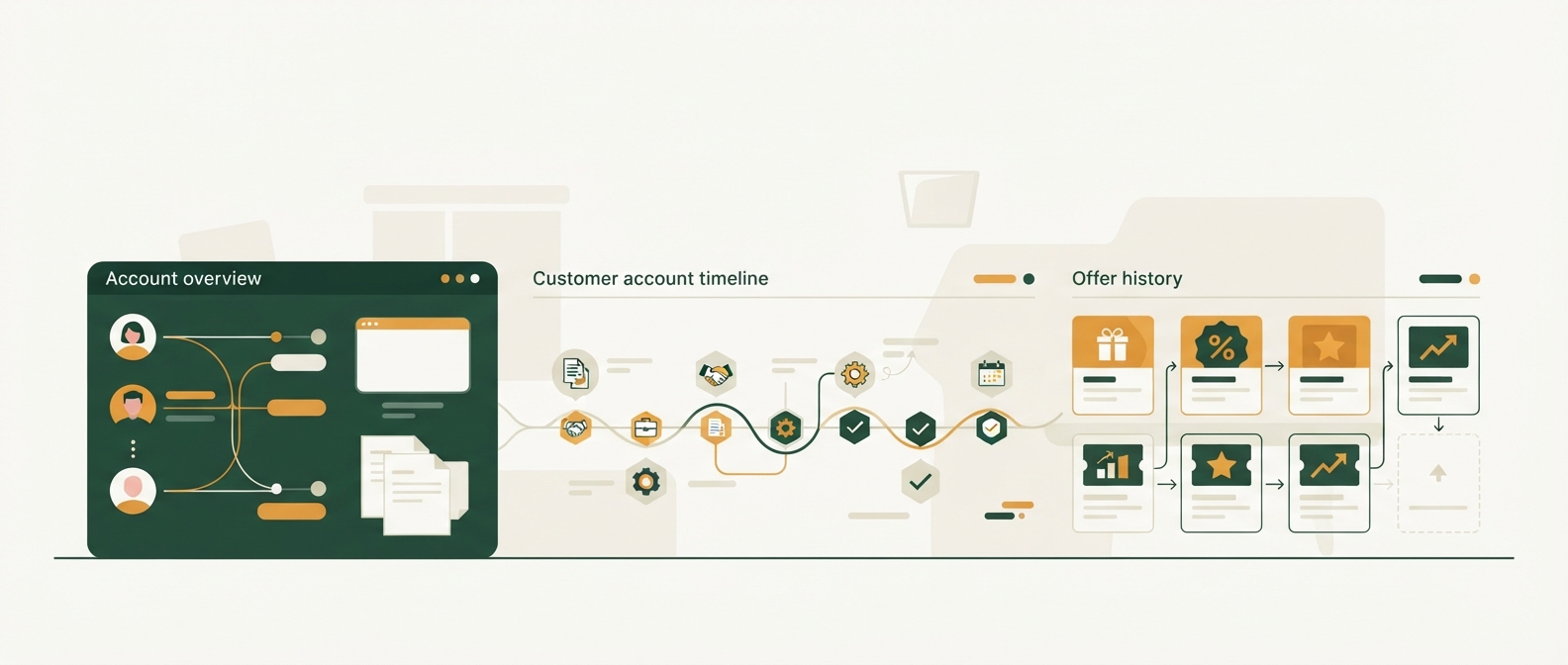
How billing systems categorize customers by tenure before a rep ever picks up
By the time you get a human on the phone, or land in a chat window, the system has already sorted you. Most subscription and billing platforms tag every account with a tenure bucket — something like new, established, or long-term — and that tag travels with your account into whatever retention workflow gets triggered when you say the word “cancel.” The rep isn’t guessing at your value to the company. They’re looking at a screen that’s already told them, in effect, how much room they have to work with.
This is why two people can call about the exact same service, with the exact same complaint, and walk away with different outcomes. The complaint is almost beside the point. What matters more to the system is where you sit in the customer lifecycle, because that number is used to predict two things: how likely you are to actually leave, and how much it would cost the company to replace you with someone new. Those two predictions, not your frustration level, are what generate the offer.
Why brand-new customers sometimes get better offers than five-year loyalists
It seems backwards, but new customers often get the richest discounts and the most flexible terms. A company that just spent money acquiring you — through an ad, a referral bonus, a promo code — doesn’t want to eat that cost by losing you in month one. Letting a brand-new account churn looks bad in the numbers that matter to whoever runs retention: it means the acquisition spend produced nothing.
A five-year customer, by contrast, has already been profitable for a long time. The company has recouped whatever it spent to get you and then some. From a pure spreadsheet view, losing a long-tenured customer is a smaller loss than losing a fresh one, even though it feels backwards from where you’re sitting. You’ve been loyal, so you assume you’ve earned better treatment. The system sometimes reads that same loyalty as evidence you’ll tolerate more before you actually leave.
The point in a customer lifecycle where retention offers usually start shrinking
There’s often a window early on — the first few months to roughly a year, depending on the industry — where offers are generous because the company is still nervous about losing you. After that window closes, many billing systems shift you into a different segment, one where the assumption is that you’re settled in. Autopay is set up, the service is woven into your routine, and the perceived “effort” required for you to leave has gone up in the company’s model, whether or not it’s gone up in real life.
Once you’re in that settled segment, reps typically have less discretion to offer steep discounts, because the system doesn’t think it needs to. This isn’t personal and it isn’t punishment for loyalty — it’s just what happens when the internal risk score attached to your account quietly drops. The irony is that this is exactly the point where many customers stop bothering to call, which reinforces the system’s assumption that long-timers don’t need convincing.
How to reference your tenure explicitly to prompt a better offer
Because tenure is already part of the equation, it’s worth putting it on the table yourself instead of assuming the rep will volunteer it. Mentioning how long you’ve been a customer, and noting that you’ve paid on time without disputes, does two things. It reminds whoever’s on the other end that you’re a known quantity, not a risk, and it gives them a concrete reason to escalate or apply a discount tier that isn’t the first one on their screen.
It also helps to frame tenure alongside a specific ask rather than a general complaint. “I’ve been a customer for a while and I’m looking at switching” lands differently than “this is too expensive,” because the first version signals that you understand there’s a decision being made about you, not just a price being quoted to you. You don’t need to be combative about it. Stating the fact plainly is usually enough to shift the conversation.
What it means when a long-time customer is offered nothing at all
Sometimes a rep will say, plainly, that there’s no discount available for your account, even after you’ve been a customer for years and even after you’ve asked directly. That’s not necessarily a sign you’re being punished — it’s often a sign that the retention system has scored your account as low-risk for departure, meaning it doesn’t believe you’ll actually cancel, or as low-value for retention, meaning the margin on your plan doesn’t leave room to negotiate.
Either way, “no offer” is information. It tells you that, at least on this call, the company’s internal math doesn’t see you as worth chasing. That doesn’t mean you have no options — it means the lever you’re pulling by calling isn’t the one that’s going to move for you. At that point, the more useful question isn’t “how do I get this rep to say yes” but whether the price itself, offer or no offer, still makes sense for what you’re getting.
Deciding whether switching providers resets you to ‘new customer’ value more than staying ever will
If tenure with your current provider has stopped buying you anything, it’s worth being honest about what switching would actually get you. New-customer pricing at a competitor is real, and it exists for the same reason your original signup discount did — the company wants your business badly enough to subsidize it up front. For services where competitors are genuinely interchangeable, rotating in as a “new” customer elsewhere can be worth more than years of loyalty with the current one.
But that math only works if you’re clear-eyed about the whole picture, not just the introductory price. Factor in any setup costs, contract terms, and how long the new-customer rate actually lasts before it reverts to standard pricing — because you’ll eventually become a long-tenured customer there too, subject to the same shrinking offers over time. Switching isn’t a permanent fix; it’s a reset button. Used occasionally and deliberately, it can genuinely lower what you pay. Used as a substitute for ever checking your actual usage and needs, it just turns bill negotiation into a game of musical chairs.
