

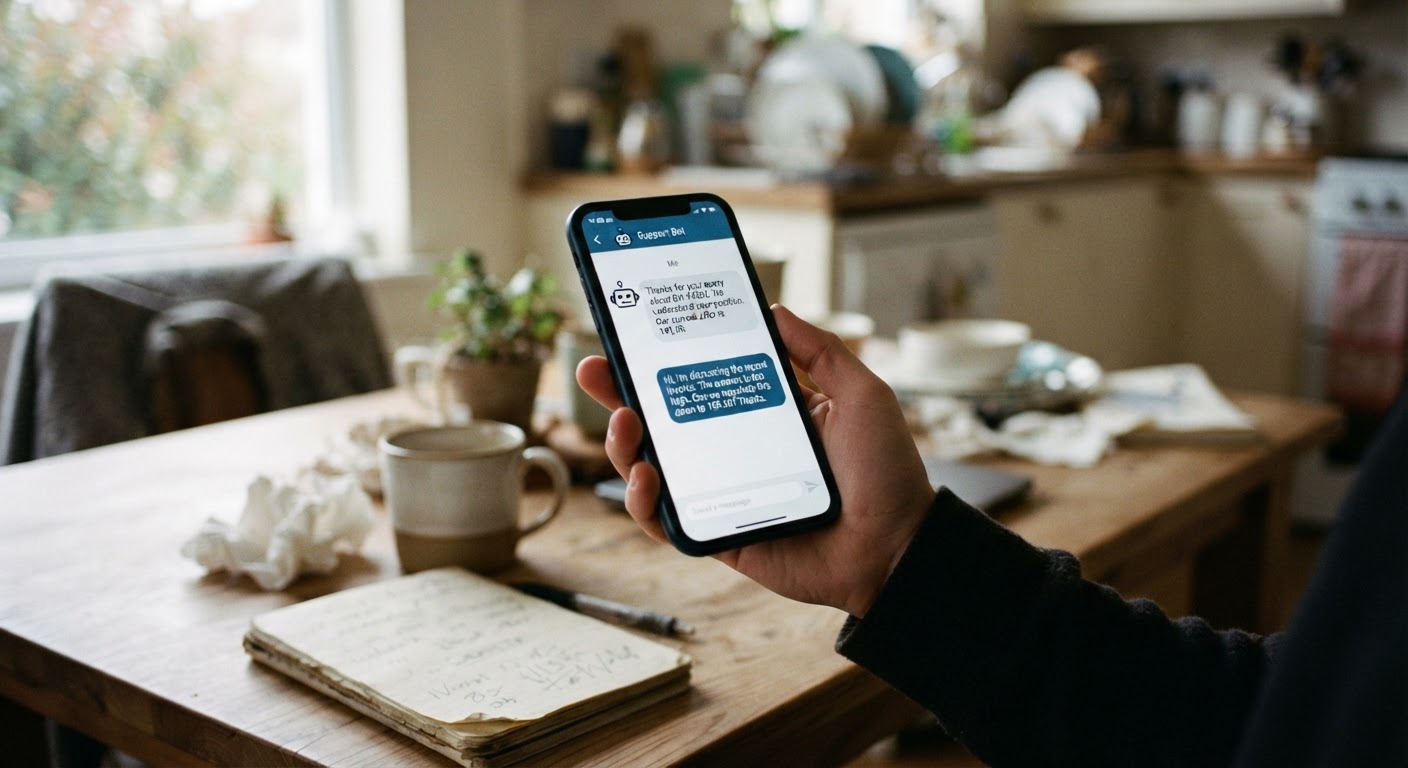
Why companies are shifting retention negotiations to AI chat
If you’ve tried to lower a cable, internet, or streaming bill recently and found yourself typing into a chat window instead of talking to a person, you’re not imagining a trend. Retention departments — the teams whose job is to keep you from cancelling — are increasingly staffed by automated systems for at least the first stage of the conversation. This isn’t an accident or a temporary staffing shortage. It’s a deliberate cost-saving move, and understanding why helps you negotiate more effectively.
Human retention reps are expensive, and a live agent handling a discount request takes time, requires training, and has some discretion to bend rules. A chatbot costs a fraction as much to run, handles unlimited conversations at once, and follows a script that companies control precisely. For the provider, routing easy or predictable requests through a bot means fewer calls reach a human, which lowers overhead. It also means the company can set firm boundaries on what gets offered without worrying about an overly generous rep giving away too much.
For you, this shift changes the negotiation itself. A chatbot doesn’t get tired, doesn’t feel sympathy, and doesn’t have the authority to make judgment calls the way a person might. But it also doesn’t get annoyed, doesn’t rush you, and follows consistent rules you can learn to work with. Knowing that you’re talking to a system with a defined set of responses — rather than a person you need to persuade — should change your approach from an emotional appeal to something more like learning the shape of a form.
What kinds of discounts a chatbot is typically authorized to offer
Chatbots are usually given a narrow menu of pre-approved offers tied to specific triggers, like a customer typing “cancel” or asking about pricing. These tend to fall into a few predictable categories: a temporary percentage discount for a set number of months, a one-time credit applied to your next bill, a free trial extension for an add-on service, or a downgrade to a cheaper plan tier.
What a chatbot usually cannot do is anything that requires case-by-case judgment: permanently locking in a lower rate, waiving an early termination fee outside of specific documented circumstances, combining multiple discounts, or matching a competitor’s advertised price exactly. Those decisions typically require someone with account-level authority, which is one reason a chatbot’s answer to “can you match this other company’s price” is often a repeated non-answer or a generic offer instead of a real yes or no.
It helps to go in with realistic expectations. If you’re hoping for a permanent 40% reduction, a bot is unlikely to be the channel that gets you there. If you’re hoping for a few months of breathing room while you decide whether to switch providers, a bot may resolve that in under five minutes.
Phrasing that triggers a human handoff instead of a canned response
Most retention bots are built around keyword recognition, and certain phrases are more likely to route you to a live agent than others. Simply asking “can I get a discount” often triggers the bot’s standard offer rather than any escalation, because that’s exactly the scenario it’s designed to handle on its own.
Stating a clear intent to cancel tends to work better than a vague complaint. Saying something like “I want to cancel my service” or “I’m calling to disconnect my account” is often treated as a higher-priority trigger than “I think my bill is too high,” because cancellation requests are usually flagged for extra attention even within automated systems. Mentioning a specific competitor by name and stating you already have an offer in hand can also push the conversation further, since price-matching decisions frequently sit outside a bot’s authority.
If the bot keeps looping back to the same offer or restates its script without addressing your actual request, it’s reasonable to type a direct request for a human: “I’d like to speak with a retention specialist” or “please transfer me to a live agent.” Repeating this calmly, without getting drawn into arguing with the bot, is usually more effective than escalating your tone. Chatbots aren’t built to respond to frustration; they’re built to respond to specific requests they recognize.
How to keep a record of the chat in case you need to reference it later
Whatever happens in the chat, save it. Most chat interfaces let you either take a screenshot as you go or request a transcript emailed to you at the end of the session — look for that option before you close the window, since some systems don’t keep records accessible after the chat ends.
A saved transcript matters for a few practical reasons. If the bot confirms a discount, a credit amount, or a promised rate, and it doesn’t show up correctly on your next bill, you’ll want documented proof of what was actually offered and when. If you get transferred to a human agent later, having the earlier conversation on hand lets you reference exactly what was already discussed instead of repeating yourself from scratch. And if you decide to escalate a complaint about how the negotiation went, a timestamped record is far more useful than your memory of the exchange.
Note the date, the specific offer amount or terms, and the confirmation or reference number if one is given. Store it somewhere you’ll actually find again — a dedicated folder in your email or a notes app tied to your household budget records — rather than trusting that you’ll remember details months from now when the discount period ends.
When it’s worth calling instead of continuing with the bot
There are situations where switching to a phone call is simply more efficient than continuing to work the chat. If your account has any complexity — a bundled package, a recent billing error, a prior disputed charge — a chatbot is more likely to get confused or defer than a human agent who can look at the full account history and make a judgment call.
It’s also worth calling if the chat has cycled through its available offers and you’re still not satisfied. Once a bot has presented what appears to be its standard menu of discounts and you’ve declined them, continuing to chat rarely produces a better result, since the bot has nothing left to offer. A phone call at that point gets you to someone who may have discretion the bot doesn’t.
Calling also makes sense if you want to negotiate multiple things at once — say, a rate reduction and a fee waiver and an equipment swap — since bots tend to handle one request cleanly but struggle with compound asks. And if you’re the kind of person who negotiates better in a real conversation, where you can read tone and respond to what’s actually said rather than typing into a box, that’s a legitimate reason on its own to skip the chatbot layer entirely.
Signs the chatbot has reached the limit of what it can negotiate
A few patterns reliably indicate you’ve hit the ceiling of what the bot is authorized to do. The clearest sign is repetition: if it offers the same discount twice in slightly different wording, it likely has one offer in its script and is presenting it as if it were new.
Another sign is vague deflection when you ask a direct question. If you ask “is this the best discount available” and get a non-answer like “we want to make sure you have the best experience” without a yes or no, that’s often a scripted dodge rather than genuine ambiguity. Bots are generally not built to say “no, this is final” — they’re built to redirect.
Watch also for the bot repeatedly suggesting you call or visit a physical location for anything beyond the basic offer. That’s frequently an indirect admission that what you’re asking for is outside its authority, even if it doesn’t say so plainly. And if the conversation starts looping — the bot returning to an earlier message or restating its opening greeting — that’s a technical sign you’ve exhausted its decision tree, not that you’re making progress. At that point, asking for a human transfer or ending the chat to call instead is a better use of your time than continuing to rephrase the same request.
