document.body.classList.add(‘bsp-site’);
.bsp-wrap{max-width:780px;margin:0 auto;padding:0 18px;font-family:’Segoe UI’,’Helvetica Neue’,Arial,sans-serif;color:#333;}
.bsp-wrap h2{color:#1a5276;font-size:1.4em;margin-top:28px;}
.bsp-wrap h3{color:#1a5276;font-size:1.15em;}
.bsp-wrap .intro{font-size:1.08em;color:#444;margin-bottom:14px;line-height:1.7;}
.bsp-wrap .trust-bar{background:#1a5276;color:#fff;text-align:center;padding:9px 12px;border-radius:5px;font-size:0.82em;letter-spacing:.6px;margin-bottom:22px;}
.bsp-wrap .widget-header{font-size:1.15em;font-weight:700;color:#1a5276;margin:26px 0 8px;}
.bsp-wrap .bhm-offer{min-height:460px;}
.bsp-wrap .cta-section{background:#eaf4fb;border-left:4px solid #1a5276;padding:18px;margin:30px 0 12px;border-radius:0 6px 6px 0;}
.bsp-wrap .disclosure{font-size:0.77em;color:#aaa;margin-top:30px;border-top:1px solid #eee;padding-top:12px;}
@media(max-width:768px){.bsp-wrap .bhm-offer{min-height:400px;}}
Household efficiency is not just an environmental concept — it is a financial one. A home that runs efficiently wastes less energy, less food, less time, and less money. Small operational improvements across multiple categories compound into significant annual savings.
Efficiency Is a System, Not a Single Fix
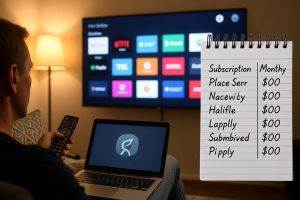
Most households approach efficiency one issue at a time — fix the leaky faucet, switch some bulbs to LED, cancel a subscription. This piecemeal approach produces some benefit but misses the larger opportunity available when you think about the whole household as an interconnected system. This article looks at efficiency across energy, food, time, and purchasing — the four areas where household waste most commonly translates into unnecessary spending.
Energy Efficiency at the System Level
Individual efficiency measures are documented elsewhere on this site. What this article adds is the system-level view: the appliances that draw power even when off, the heating and cooling that escapes through gaps in the envelope, and the hot water that is reheated repeatedly because of poor insulation.
Conduct a whole-home energy walk-through annually. Check that your attic insulation is still adequate (it settles over time). Verify that weatherstripping around every exterior door and window is intact. Confirm that your water heater thermostat is set to 120 degrees Fahrenheit. Look behind your refrigerator — coils clogged with dust make the compressor work harder, increasing electricity use by 15 to 25 percent. These are five-minute checks that collectively have a measurable impact on annual energy costs.
Food Systems That Reduce Waste and Cost
Food waste in American households is often described as a national crisis, and the financial dimension is severe — $1,500 per year for a family of four. A household food system that minimizes waste requires three things: a meal plan, strategic shopping, and organized storage.
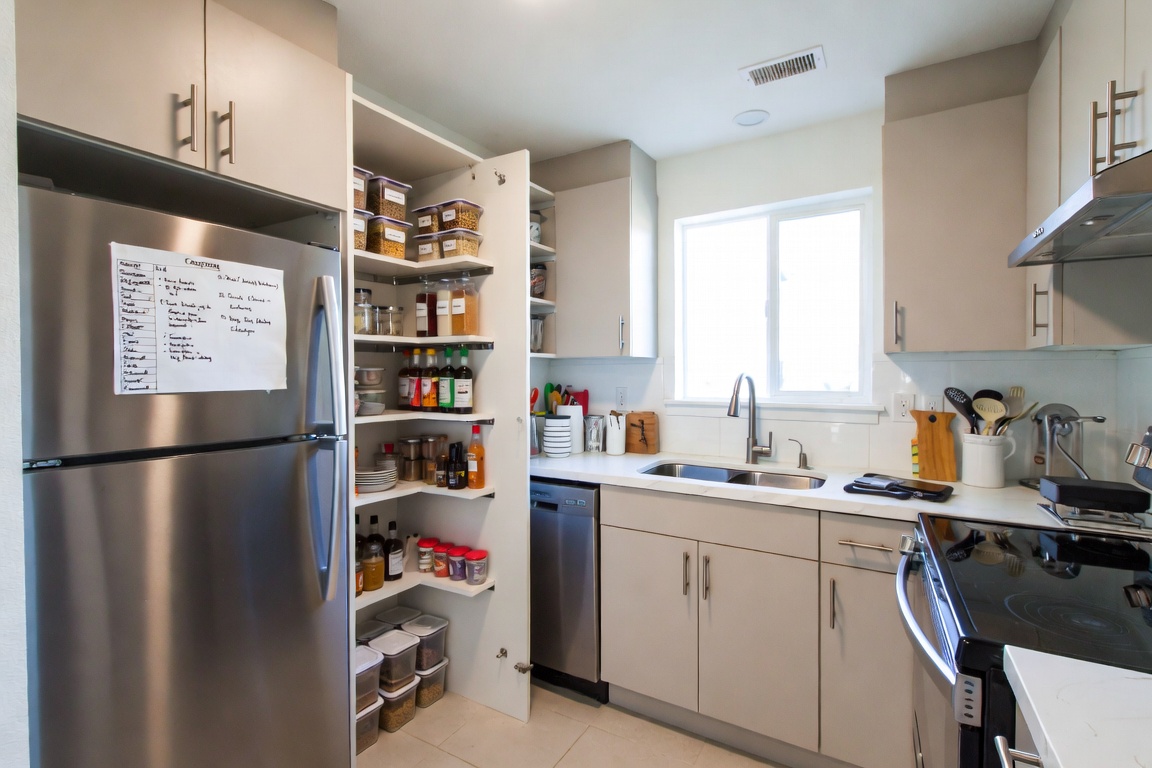
The meal plan does not need to be elaborate — five to six planned dinners per week with the flexibility to swap based on what needs to be used up. The shopping list flows directly from the meal plan. Storage organization follows the first-in-first-out principle: newer items go behind older ones, older items come to the front where they are used first. A labeled container in the freezer for “use this week” proteins prevents the common situation of a freezer full of unidentified items that never get eaten.
Time Efficiency That Reduces Spending
Inefficient time management directly drives spending in ways that are often invisible. When dinner planning fails, takeout or delivery fills the gap — at $30 to $60 per meal versus $10 to $15 for a home-cooked equivalent. When household maintenance is deferred, small problems become expensive repairs. When bill management is inconsistent, overcharges go uncaught for months.
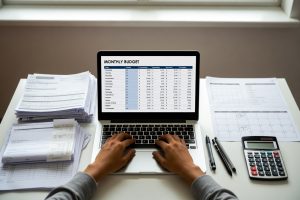
Batch processing household administrative tasks — bills, scheduling, meal planning — into a single weekly or monthly session is far more efficient than handling each task reactively. This dedicated time block, even at 30 minutes per week, prevents the small failures that generate outsized costs.
Purchasing Efficiency
Most households buy things twice — once at the grocery store and again at the convenience store or vending machine when the planned item was not available. Efficient purchasing means buying the right things at the right time from the right source. This includes: maintaining a running pantry inventory so you know what you have, building a small emergency supply of shelf-stable foods so urgency never forces a convenience premium, and consolidating shopping trips to reduce both impulse purchases and transportation costs.
The 48-hour rule on non-essential purchases is one of the most effective single habits for purchase efficiency. Before buying anything non-essential over $20, wait 48 hours. A significant percentage of impulse purchases no longer feel necessary two days later — and the ones that still do were worth buying.
Disclosure: This site may receive compensation when you click on links or complete offers through our partners. Content is for informational purposes only and does not constitute financial advice.